这条 prompt 详细描述了一个将皱褶纸球的设计理念转化为实际座椅的过程,适用于创意家具设计和高端室内装饰的中文营销场景。
中文 Prompt
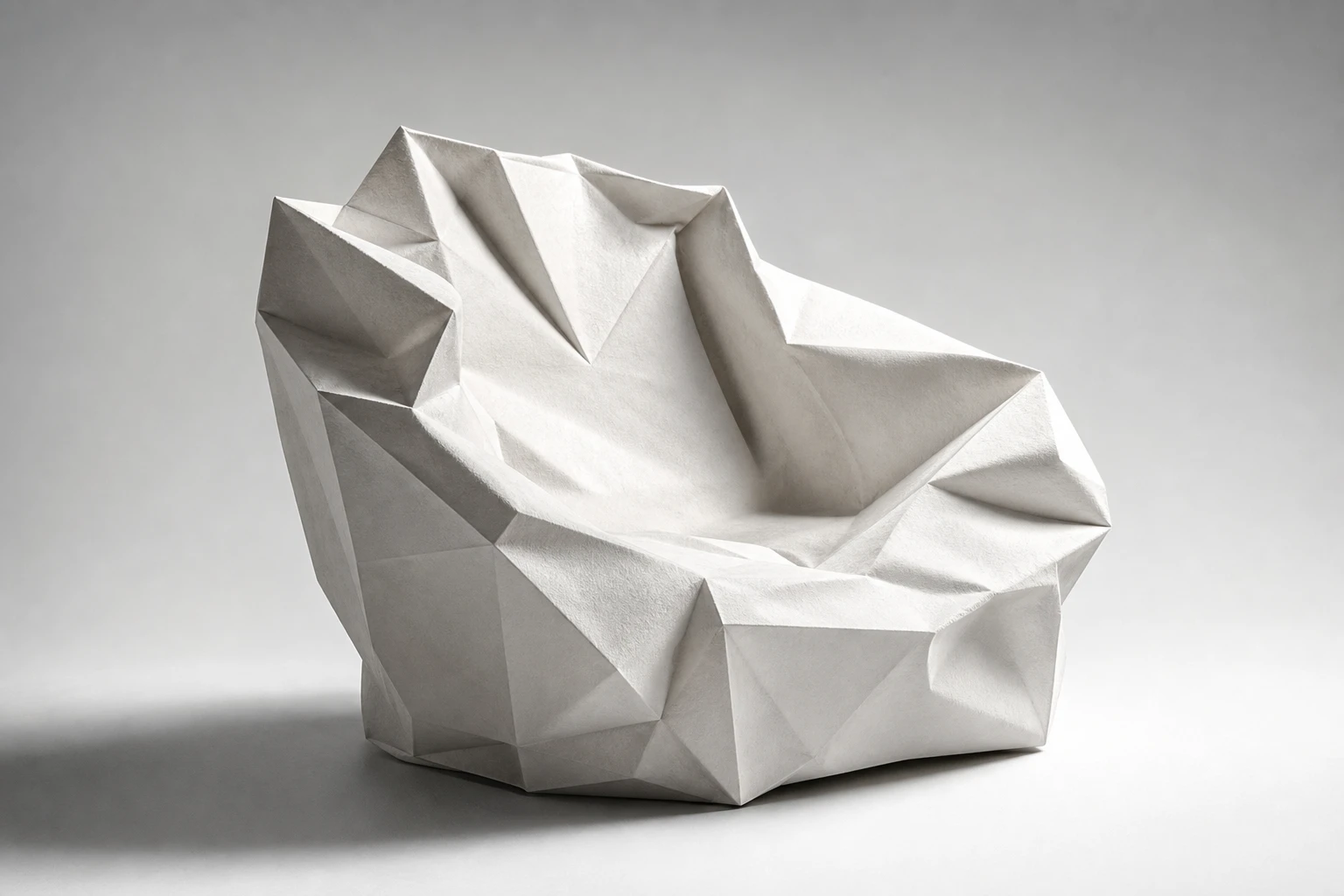
设计概念:皱褶椅 核心理念:将揉成一团的纸球的“可控混乱”转化为雕塑般的高舒适度座椅体验。 第一阶段:观察与形态分析 目标是将皱褶纸的图像解构成可用的几何数据。 折痕映射:识别主要的“谷线”和“脊线”。这些代表了椅子潜在的结构肋条或接缝。 面片化平面:将球体分解成一系列不规则的多边形。每张纸的平坦表面都成为椅子软垫或外壳的潜在面板。 阴影研究:分析“丢弃”的形式如何形成深凹处。这些自然的口袋指导着用户体重的支撑位置。 第二阶段:迭代形式探索 通过“数字皱褶”从球体转变为座椅。 减法雕刻:想象纸球是一个实体。使用布尔运算“雕刻”出一个适合人体形状的座位腔,同时保持外部的锯齿状纹理。 张力模拟:使用3D软件(如Rhino或Blender)模拟一张扁平材料被压缩的情况。这确保折痕看起来真实而不是“建模”的。 “丢弃”逻辑:尝试重力模拟,让数字网格落下,看看它如何自然地安顿下来,模仿“丢弃”的起源。 第三阶段:人体工程学转换与蓝图 将原始美学细化为功能性物体。 舒适核心:在皱褶形式上叠加标准的人体工程学模板(座椅角度:105°–110°)。调整内部“折叠”以提供腰部支撑和压力缓解。 蓝图生成:创建技术正交视图(正面、侧面、顶面)。绘制尺寸:座高:450毫米 总宽度:850毫米 表面平滑:在外壳上保持尖锐的“纸边缘”,同时软化内部接触点以增加皮肤舒适度。 第四阶段:结构整合与缩放 使概念在物理上可行。 骨架:设计一个隐藏的内部框架(可能是CNC弯曲的钢棒或3D打印的格子),跟随纸折叠中最突出的脊线以提供刚性。 材料选择:* 选项A(高端):分面铸造铝,白色粉末涂层。 选项B(柔软):真空成型回收塑料外壳,覆盖“记忆折叠”技术织物,保留皱纹外观。 第五阶段:最终原型制作与材料处理 纹理复制:对材料应用哑光、略带孔隙的表面处理,模仿厚纸的手感。 光照对比:在最终渲染中使用定向工作室照明,强调“丢弃”的阴影,使椅子看起来像一个巨大的灵感废纸团。 设计提示:为了保持“丢弃”的外观真实性,避免对称。皱褶纸球最吸引人的方面是其独特的不规则性——确保椅子的左右两侧平衡但不完全相同。
查看英文原 Prompt(保味自跑用)
Design Concept: The Crumple Chair Core Philosophy: Translating the "controlled chaos" of a tossed paper ball into a sculptural, high-comfort seating experience.

Stage 1: Observation & Morphological Analysis The goal is to deconstruct the image of the crumpled paper into usable geometric data. Crease Mapping: Identify the primary "valley" and "ridge" lines. These represent potential structural ribs or seams in the chair. Faceted Planes: Break down the sphere into a series of non-uniform polygons. Each flat surface of the paper becomes a potential panel for the chair’s upholstery or shell. Shadow Study: Analyze how the "tossed" form creates deep recesses. These natural pockets guide where the user’s weight will be cradled.

Stage 2: Iterative Form Exploration Moving from a sphere to a seat through "Digital Crumpling." Subtractive Sculpting: Imagine the paper ball as a solid mass. Use Boolean operations to "carve out" a seating cavity that fits the human form while maintaining the external jagged texture. Tension Simulation: Use 3D software (like Rhino or Blender) to simulate a flat sheet of material being compressed. This ensures the folds look authentic and not "modeled." The "Toss" Logic: Experiment with gravity-based simulation dropping a digital mesh to see how it settles naturally, mimicking the "tossed" origin.

Stage 3: Ergonomic Translation & Blueprinting Refining the raw aesthetic into a functional object. The Comfort Core: Overlay a standard ergonomic template (Seating Angle: 105°–110°) over the crumpled form. Adjust the internal "folds" to provide lumbar support and pressure relief. Blueprint Generation: Create technical orthographic views (Front, Side, Top). Map out the dimensions: Seat Height: 450mm Total Width: 850mm Surface Smoothing: Maintain the sharp "paper edges" on the exterior shell while softening the interior contact points for skin comfort.

Stage 4: Structural Integration & Scaling Making the concept physically viable. The Skeleton: Design a hidden internal frame (likely CNC-bent steel rods or a 3D-printed lattice) that follows the most prominent ridges of the paper folds to provide rigidity. Material Selection: * Option A (High-End): Faceted, cast aluminum with a white powder coat. Option B (Soft): Vacuum-formed recycled plastic shell covered in "memory-fold" technical fabric that retains a wrinkled appearance.

Stage 5: Final Prototyping & Material Finish Textural Replication: Apply a matte, slightly porous finish to the material to mimic the tactile feel of heavy-bond paper. Lighting Contrast: Use directional studio lighting in the final renders to emphasize the "tossed" shadows, making the chair look like a giant piece of discarded inspiration. Design Tip: To keep the "tossed" look authentic, avoid symmetry. The most compelling aspect of a crumpled paper ball is its unique irregularity—ensure the left and right sides of the chair are balance-equivalent but not identical
想用这个 Prompt 自己生成一张?
查看生成方法懒得抄 prompt?这些填空模板直接用
全部 3 个 →把 {变量} 换成你的产品 / 文案,复制即用,无需懂 prompt 工程。